
“DI or bust.” Just how many times have you heard that from prospective student-athletes in the recruiting process? Yet, if they were willing to look past this outdated take, they could reflect on the difficult process they went through to reach this point and learn to cherish their college soccer career. There are numerous differences between NCAA vs. NAIA vs. JUCO, but it’s about finding what suits you best.
NCAA vs. NAIA vs. JUCO: Breaking Down the Divisions
The NCAA (National Collegiate Athletic Association) is the largest and most recognized governing body for college sports in the United States, with over 1,200 member institutions. It is divided into three distinct divisions—Division I (DI), Division II (DII), and Division III (DIII)—each offering unique experiences and opportunities for student-athletes.
NCAA Soccer Overview
1️⃣ Division I (DI)
- Home to the most prestigious athletic programs and largest universities.
- Offers full athletic scholarships to top recruits, along with the best facilities and largest budgets.
- The level of competition is the highest among all divisions, with rigorous training schedules, frequent travel, and high academic expectations.
- Athletes at this level often juggle intense training alongside demanding coursework.
- Top Programs: University of Maryland, Stanford University, Clemson University.

Why Division I Is the Pinnacle of College Soccer:
Division I is widely considered the elite level of college soccer. Athletes compete against the best in the nation, often in front of thousands of fans and with direct exposure to professional scouts. The commitment required is massive—training sessions are intense, travel schedules are demanding, and the competition is relentless. For many aspiring professionals, DI represents the ultimate proving ground, offering the facilities, coaching, and visibility needed to make the leap to the next level.
2️⃣ Division II (DII)
- Provides a balance between athletics and academics, with competitive teams and slightly more manageable schedules than DI.
- Offers partial athletic scholarships, making it an accessible yet competitive option.
- Athletes enjoy a more balanced student experience, allowing for stronger focus on personal development and academics.
- Programs are competitive, but the reduced intensity allows student-athletes to pursue academic interests more freely.
- Top Programs: University of Charleston, Cal State LA, Lynn University.
My Experience in DII:
My own journey through NCAA Division II gave me firsthand insight into this balance. Training was intense, but there was room to develop both athletically and academically. Unlike the grind-heavy focus seen in DI, DII programs allowed me to work on my tactical awareness and technical skills alongside strength and conditioning. The environment was still highly competitive, but it fostered growth in a well-rounded way, both on and off the field.
Emphasis on Development:
While physicality is still a focus, DII programs tend to incorporate more tactical training and technical skill development, allowing athletes to grow in multiple facets of the game.

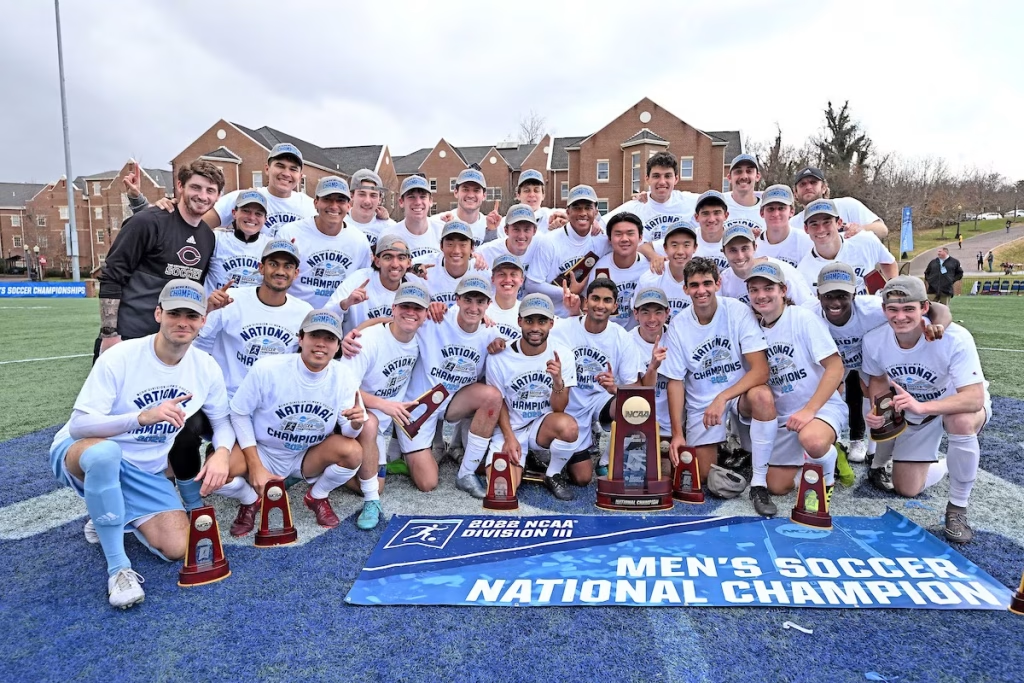
3️⃣ Division III (DIII)
- Prioritizes academics over athletics, with no athletic scholarships provided.
- Competition remains high, but student-athletes have more flexibility to focus on their studies and extracurricular activities.
- Programs are known for strong academic support and smaller class sizes, fostering a well-rounded college experience.
- Many athletes choose DIII for its emphasis on life beyond sports while still competing at a high level.
- Top Programs: Amherst College, Messiah University, Tufts University.
Emphasis on Student Development:
DIII athletes often report a more holistic college experience, with strong support from academic advisors and coaches who understand the importance of education alongside sport.
Unique Features of NCAA Soccer:
- Redshirting and Eligibility:
One of the unique aspects of NCAA soccer is the ability to redshirt, which allows players to train and attend school for a year without losing a season of eligibility. This is particularly valuable for athletes who need time to adjust to the competition level or recover from injuries. - Transfer Pathways:
NCAA athletes often have the option to transfer between divisions or to NAIA and JUCO, providing flexibility if they want more playing time or a different academic environment.
Take the Next Step:
Not sure if NCAA Division I, II, or III is the right fit for you?
Message me on Instagram; @jmc_recruiting or email joseph@collegesoccerinsight.com to get personalised guidance through CSI Insight+ and build the best path forward.
NAIA Soccer Overview
The NAIA (National Association of Intercollegiate Athletics) is an often overlooked but highly competitive governing body for college soccer in the United States. Unlike the NCAA, the NAIA consists of smaller institutions that prioritize both athletics and academics while maintaining a strong community focus. With nearly 250 member schools, the NAIA offers a unique pathway for student-athletes looking for competitive soccer with more flexibility.
Advantages of NAIA Soccer:
- Flexible Eligibility Requirements:
NAIA schools often have more lenient eligibility rules, making it easier for international students and non-traditional students to participate. Unlike the NCAA, which has strict academic and amateurism guidelines, the NAIA is more accommodating, allowing athletes to begin their college careers without as many regulatory hurdles. - Competitive Scholarships:
Despite its smaller size, NAIA programs frequently offer athletic scholarships that rival those at NCAA DII schools. Many athletes find that NAIA programs can provide nearly full funding when combined with academic scholarships. - Smaller Class Sizes and Community Focus:
NAIA schools typically have smaller student populations, which allows for more personalized attention from professors and coaches. Athletes often experience a close-knit community that supports both their academic and athletic growth. - International Representation:
NAIA programs are known for recruiting internationally, offering opportunities to athletes from around the globe. This diversity often enhances the level of competition and brings unique playing styles to the league.
Top NAIA Soccer Programs:
- Lindsey Wilson College (Kentucky): Known for its powerhouse soccer program and numerous national championships.
- University of Rio Grande (Ohio): A consistent contender in the NAIA national tournament.
- Central Methodist University (Missouri): Regularly ranks in the top five and produces top talent year after year.

My Experience in NAIA:
Having played in both NCAA and NAIA divisions, I can confidently say that the level of competition at top NAIA schools rivals that of NCAA DII programs. My NAIA team would have comfortably beaten my former NCAA DII school, yet many overlook this division due to misconceptions. The quality of training, international diversity, and competitive scholarships made my time in NAIA one of the best experiences of my career.
NAIA programs also place a strong emphasis on player development and community, allowing athletes to excel both on the field and in the classroom. The smaller campus size and tighter community feel are massive benefits that NCAA schools sometimes lack.
NAIA vs. NCAA: Key Differences
| Category | NAIA | NCAA |
|---|---|---|
| Scholarships | Generous athletic scholarships, sometimes rival DII | More full scholarships at DI level, partial at DII |
| Eligibility | More flexible, easier for international students | Stricter academic and amateurism guidelines |
| Class Sizes | Smaller class sizes, more personal attention | Larger campuses, less individual focus |
| Transfer Flexibility | Easier to transfer between NAIA schools | More complex transfer regulations |
| International Presence | Strong international recruiting | More restricted eligibility requirements |
Unique Features of NAIA Soccer:
- Eligibility:
NAIA eligibility is a lot more lenient than the NCAA. Many players who aren’t able to be greanted NCAA eligibility often end up playing in the NAIA - Scholarships:
NAIA schools offer up to 12 full scholarships for men’s soccer, more than NCAA DI (9.9) and DII (9). These can be split across the roster, allowing more athletes to receive partial funding. Unlike NCAA DIII, which provides no athletic scholarships, NAIA programs prioritize accessibility and financial support. - Championship Pathways:
The NAIA hosts its own National Championship, which is highly competitive and features top teams from across the country.
Take the Next Step:
Curious if NAIA soccer is the right fit for you?
Message me on Instagram, @jmc_recruiting, or email joseph@collegesoccerinsight.com to get personalised guidance through CSI Insight+ and explore how the NAIA could launch your college soccer career.
For those looking to market themselves effectively, creating the right content is crucial. Learn how to produce a Recruitment-Worthy Highlight Video that will catch the eye of college coaches.
JUCO Soccer Overview
The JUCO (Junior College) pathway is an underrated yet highly effective route for aspiring college soccer players. Governed by the National Junior College Athletic Association (NJCAA), JUCO programs provide a unique stepping stone for athletes looking to transition to NCAA or NAIA programs after gaining experience and developing their skills. With over 500 programs across the United States, JUCO soccer is both competitive and affordable, making it a viable option for many student-athletes.
Advantages of JUCO Soccer
- Cost-Effective:
JUCO programs are significantly more affordable than four-year institutions, allowing athletes to pursue their soccer ambitions without heavy financial burdens. Many junior colleges also offer scholarships to further reduce costs. - Playing Time Opportunities:
Unlike larger NCAA programs where freshmen often struggle for game time, JUCO athletes typically get immediate opportunities to compete. This is especially valuable for player development and match experience. - Development and Transfer Pathway:
JUCO serves as a bridge to NCAA and NAIA programs. Many athletes spend two years developing their skills before transferring to stronger programs with more scholarship opportunities. The JUCO experience often leads to increased maturity and readiness for higher competition levels. - Eligibility and Flexibility:
JUCO eligibility requirements are more flexible than NCAA, making it an ideal pathway for athletes needing academic improvement or those seeking a second chance at collegiate athletics.
Top JUCO Soccer Programs
Monroe College (New York): A highly competitive program that regularly sends players to NCAA programs.
Iowa Western Community College (Iowa): Consistently one of the strongest JUCO soccer programs, producing top-level talent that transfers to NCAA DI and DII schools.
Tyler Junior College (Texas): Known for dominating in the NJCAA soccer scene, with multiple national championships.

My Experience in JUCO
My time in JUCO soccer was foundational to my development as a player. Unlike NCAA programs where game time can be limited, JUCO allowed me to play regularly as a freshman, sharpening my skills and building confidence. The competitive environment, combined with the affordability, made it an ideal starting point for my college soccer journey.
JUCO’s intense match schedule and community-focused teams helped me build resilience and adaptability—traits that proved essential when I transitioned to NCAA and NAIA levels.
JUCO vs. NCAA vs. NAIA: Key Differences
| Category | JUCO | NCAA | NAIA |
|---|---|---|---|
| Scholarships | Varies by school, often combined with financial aid | DI: 9.9 (Men), 14 (Women); DII: 9 each | 12 full scholarships, flexible splitting |
| Eligibility | More lenient, ideal for academic development | Strict eligibility and amateurism guidelines | Flexible, good for international players |
| Playing Time | Immediate opportunities for freshmen | Limited for freshmen at DI; better at DII/DIII | Often immediate for talented players |
| Transfer Pathway | High transfer rate to NCAA and NAIA programs | Complex transfer rules between divisions | Easier transfer between NAIA institutions |
| Cost | Significantly cheaper, great for affordability | Higher tuition costs, especially at DI schools | More affordable than NCAA DI |
Unique Features of JUCO Soccer
- Two-Year Programs:
JUCO athletes typically compete for two years before transferring, gaining critical experience in a shorter time frame. - High Transfer Success Rate:
A large percentage of JUCO athletes transition successfully to NCAA or NAIA programs, often with scholarships secured. - Development Focused:
With less pressure to win at all costs, JUCO programs focus heavily on player development, both academically and athletically. - Flexible Eligibility Requirements:
JUCO is ideal for athletes who may not yet meet NCAA or NAIA eligibility requirements but want to continue their athletic and academic careers.
Pros and Cons: NCAA vs. NAIA vs. JUCO

| Pathway | Pros | Cons |
|---|---|---|
| NCAA DI | – Top facilities, strong competition, full scholarships – High exposure for professional scouts | – High demands, limited playing time for freshmen – Heavy travel schedules |
| NCAA DII | – Balanced student-athlete life, solid competition – Partial scholarships available | – Fewer scholarships compared to DI – Less exposure to pro scouts |
| NCAA DIII | – Strong academics, good competition – Smaller class sizes and community focus | – No athletic scholarships – Limited athletic budgets |
| NAIA | – Flexible eligibility, strong competition, scholarships – Smaller class sizes for more personalized attention | – Less recognized than NCAA – Smaller schools with fewer resources |
| JUCO | – Affordable, good playing time, transfer opportunities – Easier eligibility requirements | – Lower budgets, limited facilities – Short-term (2 years) before transfer |
Real-Life Success Stories from NCAA vs. NAIA vs. JUCO
NCAA Success Story: Clint Dempsey (NCAA DI, Furman University)
Clint Dempsey’s journey began at Furman University in NCAA Division I before launching a successful career with the USMNT and Premier League club Fulham. His experience at the DI level gave him exposure, high-level competition, and the platform to develop into a world-class player.
Learn how the NCAA can be a path to professional soccer →
NAIA Success Story: Nathan Opoku (NAIA, Lindsey Wilson College)
Nathan Opoku shone at Lindsey Wilson College, a powerhouse in NAIA soccer. His performances earned him a professional contract with Leicester City in the English Premier League. His story is proof that NAIA soccer can be a direct path to the professional stage.
Explore the top NAIA soccer programs →
JUCO Success Story: Moïse Bombito (JUCO, Iowa Western Community College)
Moïse Bombito played for Iowa Western Community College, where he developed his game before moving to OGC Nice and earning caps for the Canadian national team. His JUCO experience provided the platform to improve his skills and get noticed by bigger programs.
Discover why JUCO is a hidden gem for college soccer →
FAQs: NCAA vs. NAIA vs. JUCO
It depends on your goals. NCAA programs generally have more exposure and larger budgets, particularly at the DI level, while NAIA offers more flexible eligibility and generous scholarships. Top NAIA programs often rival NCAA DII in quality, and the smaller class sizes provide more personalized academic support.
Absolutely! JUCO is often used as a stepping stone to both NCAA and NAIA programs. Many athletes spend two years at a junior college before transferring, usually with stronger skills and more playing experience. In fact, JUCO athletes are highly sought after because they enter four-year programs with game experience and maturity.
Yes, especially at the top programs. Schools like Lindsey Wilson College and Mobile University in the NAIA are consistently strong, and their rosters are filled with international and domestic talent. Many NAIA teams would be highly competitive with NCAA DII schools—sometimes even outperforming them.
Yes, all three divisions welcome international student-athletes. However, NAIA is particularly flexible with international recruitment, offering easier eligibility pathways. JUCO also sees a large number of international players because of its affordability and simpler eligibility requirements.
Learn how international students can navigate college recruitment →
Yes, many junior colleges offer athletic scholarships, often paired with academic aid to reduce costs. The scholarship amounts can vary widely by school, but they are typically enough to make JUCO one of the most affordable paths to play college soccer.
Looking Beyond College Soccer Nametags
Please take this with a pinch of salt; I can only comment on what I’ve experienced. But think carefully before dismissing NAIA or JUCO just because the label puts you off.
Some of the best programs I’ve seen aren’t Division I. Explore strong NAIA and JUCO options on the site.
Ready to start your college soccer journey? Message me on Instagram: @jmc_recruiting or email joseph@collegesoccerinsight.com for personalised guidance through CSI Insight+.

Leave a Reply