

Securing college soccer scholarships can be the key to unlocking your athletic and academic potential in the United States. With pathways spanning NCAA, NAIA, and JUCO, each division presents unique opportunities for student-athletes to reduce their education costs while playing competitive soccer.
Understanding the differences between these divisions and knowing how to position yourself for recruitment is crucial. From full-ride college soccer scholarships at NCAA D1 programs to flexible financial aid packages in NAIA and cost-effective options at JUCO, there’s a pathway for every kind of player.
In this guide, we break down everything you need to know about college soccer scholarships: how they work, where to find them, and how to maximize your chances of landing one. Whether you’re just starting your recruitment journey or looking to transfer, this comprehensive guide will equip you with the knowledge to secure the right college soccer scholarships for your goals.
Ready to take the first step toward your college soccer scholarship? Let’s chat about your options.
👉 Message me on Instagram or Book a Free Consultation
NCAA College Soccer Scholarship Opportunities
Division 1 (D1): The Elite Level

NCAA Division 1 soccer programs are the most competitive and often offer the largest athletic scholarships. These scholarships are typically full or partial rides, covering tuition, room, board, and other expenses. However, they are limited in number, with men’s programs allowed up to 9.9 scholarships and women’s programs up to 14 per team.
Key Points:
- Highly competitive to earn a full ride.
- Scholarships can be divided among multiple players.
- Academic performance and standardized test scores (like the SAT/ACT) are often crucial for eligibility.
- Balancing soccer commitments with academics can be challenging at this level.
Division 2 (D2): Balance of Athletics and Academics
NCAA D2 schools also offer athletic scholarships, but they are more commonly partial rather than full rides. Student-athletes at this level often combine athletic scholarships with academic or merit-based aid to cover expenses.
Key Points:
- More flexible scholarship distribution than D1.
- Strong focus on the student-athlete experience.
- Coaches may prioritize a well-rounded player profile (both academics and athletics).
- Opportunities to transfer to D1 if performance is strong.
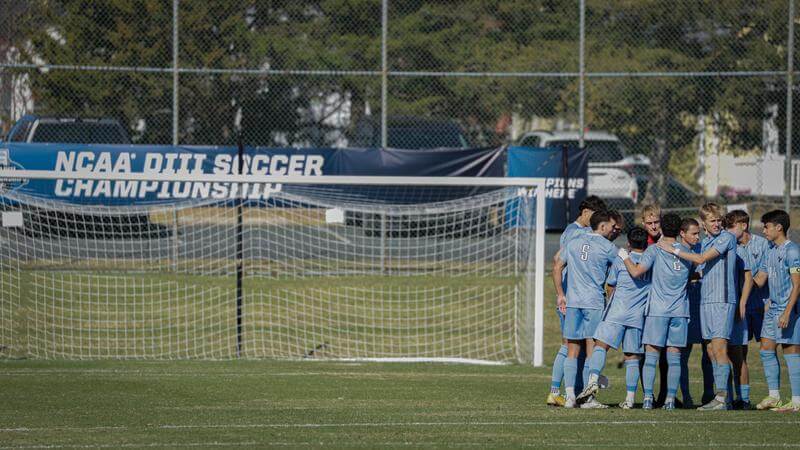
Division 3 (D3): Academics First
Unlike D1 and D2, NCAA Division 3 does not offer athletic scholarships. Instead, schools in this division focus on academic and need-based financial aid. This makes D3 an excellent option for players who excel academically or qualify for other forms of aid.
Key Points:
- No direct athletic scholarships.
- Significant opportunities for merit-based and need-based aid.
- Often smaller, private institutions with strong academic programs.
- Great for athletes who prioritize education but still want to compete.
NAIA Soccer Scholarship Opportunities
Flexibility and Smaller Programs
NAIA schools are typically smaller than NCAA institutions, but they can be just as competitive, especially at the top level. NAIA programs often have fewer restrictions when it comes to distributing scholarships, allowing coaches to divide funds creatively to recruit a strong roster.
Key Points:
- Up to 12 scholarships per team, but these are often divided among players.
- More freedom to combine athletic, academic, and merit-based aid.
- Popular among international students due to flexible scholarship structures.
- Lower tuition costs compared to many NCAA schools, making partial scholarships go further.
The International Edge

NAIA is known for its openness to international players, providing a smoother pathway for student-athletes from abroad. Scholarships can also be awarded based on a combination of athletic talent and academic achievement, making it an attractive option for well-rounded players.
Key Points:
- International players often receive more consideration for aid.
- Coaches can work around scholarship limits to build competitive teams.
- Easier transition from international soccer systems compared to NCAA.
JUCO College Soccer Scholarships: The Affordable Pathway to Four-Year Schools

Affordable Pathway to Four-Year Schools
Junior Colleges (JUCO), governed by the National Junior College Athletic Association (NJCAA), offer a unique pathway for student-athletes looking to develop their skills, improve academics, or gain more exposure before transferring to a four-year school. JUCO programs are split into Division 1 and Division 2, each with distinct scholarship opportunities.
Key Points:
- Division 1: Offers full athletic scholarships, including tuition, room, board, and books.
- Division 2: Provides partial athletic scholarships, typically covering tuition and fees.
- Lower overall tuition costs compared to NCAA and NAIA, which makes even partial scholarships highly valuable.
- Easier transition academically, with lower admission requirements than most four-year universities.
Pathway to NCAA or NAIA
One of the greatest benefits of playing at the JUCO level is the opportunity to transfer to a four-year NCAA or NAIA program. Many student-athletes use JUCO to improve their GPA, gain more playing time, and attract interest from bigger schools.
I played two years of Juco soccer before earning a strong scholarship to play D2 soccer. This was a scholarship that wouldn’t have been available without my Juco expereince.
Key Points:
- High transfer rates to NCAA D1, D2, and NAIA schools.
- Opportunity to continue athletic scholarships after transferring.
- Coaches from four-year schools often scout JUCO games for talent.
How to Maximize Your Chances for College Soccer Scholarships
1️⃣ Build a Strong Highlight Video
- Coaches need to see you in action. A well-edited highlight video showcasing your technical skills, tactical awareness, and athleticism is crucial.
- Include a variety of game situations—defending, attacking, passing, and goal-scoring moments.
Not sure if your highlight video is recruiter-ready? Send it over, and I’ll give you direct feedback.
👉 Message me your video on Instagram.”
👉 Learn how to create a standout soccer highlight video.
2️⃣ Focus on Academic Performance
- Eligibility for scholarships often depends on your GPA and SAT/ACT scores.
- NCAA and NAIA have different academic requirements, so it’s important to understand what you need to be eligible.
3️⃣ Network with Coaches Early
- Start reaching out to coaches at NCAA, NAIA, and JUCO programs as early as possible.
- Send them your highlight video, academic transcript, and a short bio.
- Follow up regularly and express genuine interest in their program.
4️⃣ Attend Showcases and ID Camps
- These events are prime opportunities to be seen by multiple coaches.
- Focus on showcases attended by schools in the divisions you are targeting (NAIA, NCAA, JUCO).
5️⃣ Leverage International Opportunities (if applicable)
- If you are an international player, NAIA and JUCO tend to be more open to international recruitment.
- Highlight your playing experience, especially if it includes regional or national-level competition.
Cost Comparison and Value for Money

When it comes to deciding between NCAA, NAIA, and JUCO, understanding the cost of attendance and how scholarships can offset those expenses is crucial. Here’s a breakdown of what you can expect for each division:
Curious about how much you could save with a soccer scholarship? Let’s discuss your options.
👉 Book a Free Consultation
1️⃣ NCAA Cost Breakdown (Rough Guide)
| Division | Average Tuition (Per Year) | Room & Board | Total Estimated Cost | Scholarship Impact |
|---|---|---|---|---|
| D1 Public | $20,000 – $25,000 | $10,000 – $12,000 | $30,000 – $37,000 | Full rides possible, partials more common |
| D1 Private | $35,000 – $45,000 | $12,000 – $15,000 | $47,000 – $60,000 | Full rides for top talent, usually partial |
| D2 Public | $15,000 – $20,000 | $10,000 – $12,000 | $25,000 – $32,000 | Often partial scholarships |
| D2 Private | $30,000 – $40,000 | $12,000 – $15,000 | $42,000 – $55,000 | Combination of athletic and academic aid |
| D3 | $30,000 – $45,000 | $12,000 – $15,000 | $42,000 – $60,000 | No athletic scholarships, but strong academic and merit aid |
Key Takeaways:
- NCAA D1 public schools are the most affordable option with full athletic scholarships for top athletes.
- Private D1 and D2 schools are significantly more expensive but sometimes offer substantial merit-based aid.
- D3 schools rely on academic scholarships and financial aid packages—no athletic funding.
2️⃣ NAIA Cost Breakdown (Rough Guide)
| Type of School | Average Tuition (Per Year) | Room & Board | Total Estimated Cost | Scholarship Impact |
|---|---|---|---|---|
| Public NAIA | $15,000 – $20,000 | $8,000 – $10,000 | $23,000 – $30,000 | Athletic and academic scholarships often combined |
| Private NAIA | $20,000 – $30,000 | $10,000 – $12,000 | $30,000 – $42,000 | Full athletic scholarships available |
Key Takeaways:
- NAIA tuition costs are generally lower than NCAA private schools, making them a cost-effective option.
- Scholarships are more flexible, and international players often receive more substantial aid.
- NAIA schools tend to combine athletic, academic, and merit-based scholarships effectively.
3️⃣ JUCO Cost Breakdown (Rough Guide)
| Division | Average Tuition (Per Year) | Room & Board | Total Estimated Cost | Scholarship Impact |
|---|---|---|---|---|
| Division 1 | $5,000 – $8,000 | $6,000 – $8,000 | $11,000 – $16,000 | Full athletic scholarships available |
| Division 2 | $3,000 – $5,000 | $6,000 – $8,000 | $9,000 – $13,000 | Partial scholarships, tuition and fees mostly covered |
Key Takeaways:
- JUCO schools are by far the most affordable option, especially for those with partial scholarships.
- Full scholarships at JUCO D1 can completely cover costs, making it ideal for athletes who want to save money before transferring.
- Many JUCO athletes transition to NCAA or NAIA with scholarships intact.
Real-Life Case Studies & Examples
- NCAA D2 Player Example: A student-athlete at a public D2 school receives a partial athletic scholarship and combines it with academic aid, bringing their total cost down from $25,000 to $8,000.
- NAIA International Player Example: An international player attending a private NAIA school gets both athletic and academic scholarships, cutting their tuition from $30,000 to $10,000.
- JUCO to NCAA Transfer: A JUCO D1 player earns a full ride, paying nothing for two years before transferring to an NCAA D1 school with a scholarship that covers 50% of tuition.
FAQ: Common Questions About College Soccer Scholarships

Yes, full-ride college soccer scholarships are available, but they are highly competitive. NCAA Division 1 programs offer the most opportunities for full rides on the women’s side – 14. While for men’s soccer, NAIA programs can offer up to 12.
NCAA D1 offers the most full rides, while D2 focuses more on partial scholarships. NAIA is usually cheaper for internationals – 12 full scholarships per full-funded program. JUCO is the most cost-effective option with easier pathways to transfer to NCAA or NAIA.
For a detailed comparison of these pathways, read my full breakdown here: NAIA vs. NCAA vs. JUCO.
The key to securing a college soccer scholarship is preparation. This includes building a strong highlight video, networking with coaches, and attending showcases. Learn how to make your highlight video stand out with my guide: How to Create a Standout Soccer Highlight Video.
Yes, international students are eligible for college soccer scholarships at NCAA, NAIA, and JUCO institutions. NAIA is particularly open to international athletes, often providing flexible scholarship options. If you’re interested in learning how international players can navigate the recruitment process, check out my guide on How International Students Can Secure Soccer Scholarships.
Absolutely. JUCO college soccer scholarships are an affordable stepping stone to four-year schools. Many athletes use JUCO to improve their grades, gain playing time, and transfer to NCAA or NAIA programs with stronger offers. For more on why JUCO is a smart choice, visit my article on JUCO Soccer Scholarships.
Conclusion: Choosing the Right Path for College Soccer Scholarships
Pursuing a college soccer scholarship is about more than just choosing the right division; it’s about understanding where you fit best and maximizing your opportunities. Whether you’re eyeing the elite competitiveness of NCAA D1, the balance of academics and athletics in NCAA D2, the flexibility of NAIA, or the cost-effective pathway of JUCO, each offers unique advantages that can pave the way to your soccer dreams.
But navigating this process alone can be overwhelming. That’s where guidance makes the difference. If you’re ready to take the next step in your soccer journey, I can help you understand the best pathway based on your goals, skill level, and academic standing.
🚀 Ready to Get Started?
If you’re ready to take your recruiting process seriously, get in touch. You can message me on Instagram at @jmc_recruiting or email me directly at joseph@collegesoccerinsight.com to start building a clear plan for your college soccer journey.

Leave a Reply