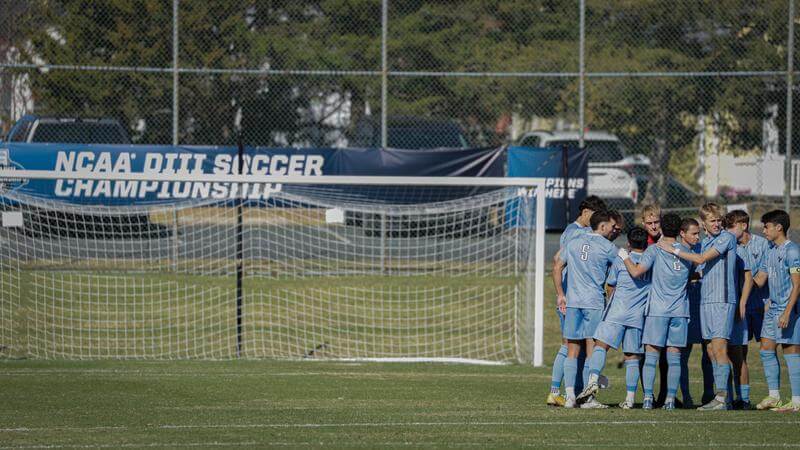

If you’re exploring your options to play college soccer, don’t overlook NCAA Division III soccer. With over 400 schools and thousands of players across the U.S., D3 is the largest NCAA division and one of the most misunderstood. There are no athletic scholarships at this level, which causes many recruits to assume the competition isn’t serious. But that couldn’t be further from the truth.
Whether you’re a late bloomer, a strong academic student, or someone who values a more balanced college experience, NCAA D3 soccer could be the perfect fit. From elite private colleges to top-ranked academic institutions, many D3 programs offer high-quality soccer paired with generous academic or need-based financial aid.
In this complete guide, we’ll cover everything you need to know:
- How NCAA D3 recruiting works
- The real level of play at D3
- The truth about scholarships and financial aid
- How D3 compares to NCAA Division I and Division II
- And what life is really like as a student-athlete at this level
Plus, if you’re still figuring out where you fit, check out our breakdowns of the NAIA soccer path and the college soccer recruiting timeline to help you plan your journey.
Let’s break down the ins and outs of NCAA Division III soccer and why it might just be the smartest decision you’ll make in your recruiting process.
What Makes NCAA Division III Soccer Different?
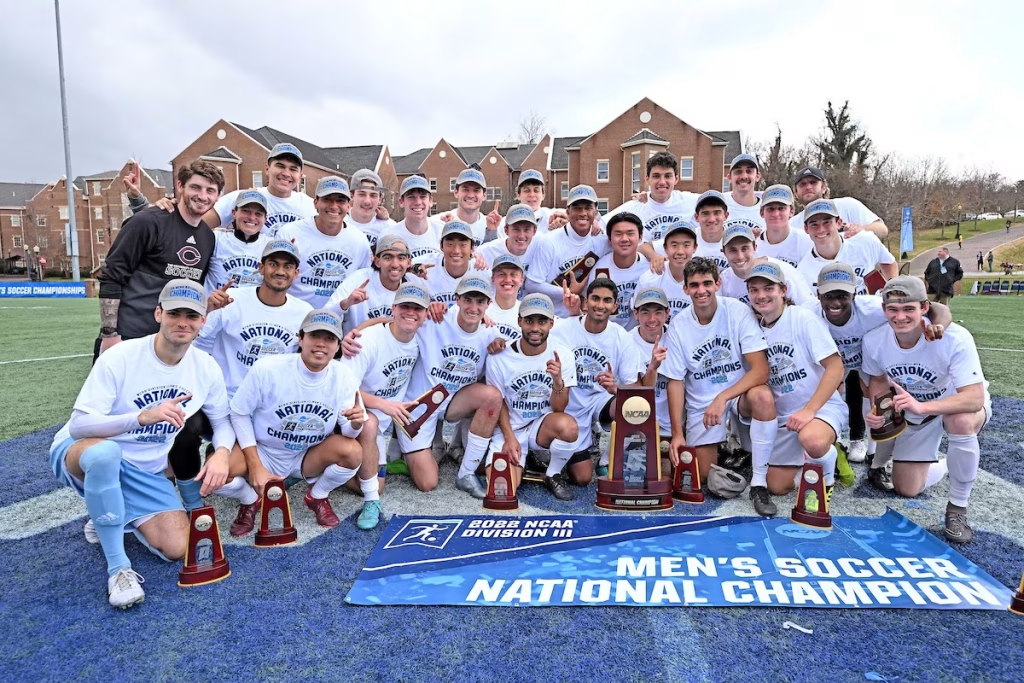
NCAA Division III soccer offers the largest number of programs across all divisions, with over 430 men’s and 440 women’s teams. But it’s not just the volume, it’s the philosophy. D3 emphasizes a student-first experience, where soccer is important, but not all-consuming. Unlike NCAA Division I programs, where the time commitment can feel like a full-time job, D3 athletes typically have more flexibility in their schedule. This opens up time for internships, academic excellence, and even opportunities like studying abroad.
That doesn’t mean the level of play is low. In fact, many of the top NCAA D3 soccer programs compete at a national level and could rival mid- or lower-tier D1 teams. Schools like Tufts, Messiah, Amherst, and Chicago are known for their tactical discipline, physical intensity, and highly competitive environments. If you want to continue playing serious college soccer while getting a well-rounded college experience, D3 is worth a close look.
It’s also a popular choice for international players, late bloomers, and student-athletes who prioritize academics but still want to compete. Many players and families are surprised to find that D3 soccer can actually be more affordable than D1 or D2 thanks to generous academic scholarships and need-based aid.
D3 isn’t about being “less serious”, but more about balance. If you’re looking for a competitive environment that won’t limit your ability to grow outside the game, NCAA Division III soccer might be the perfect fit.
How Competitive Is NCAA Division III Soccer?
The level of play in NCAA Division III soccer is often underestimated. While there’s a wide range of ability across the 430+ programs, the top D3 teams are seriously competitive, both tactically and physically. Many players come from elite high school programs, MLS NEXT or ECNL academies, and even international academies. In fact, the best D3 programs can often compete with and beat low/mid-tier NCAA Division I or Division II teams.
Coaching staff at strong programs are well-qualified, with many holding UEFA or USSF licenses, and the training environments reflect that. Players still commit to multiple weekly sessions, film reviews, strength training, and in-season travel.
However, there is more variation in level than you’ll see in D1 or D2. The top 50 or so programs tend to be national contenders, while others focus more on player development and maintaining a balanced team culture. As a recruit, your job is to figure out where your ability fits in that range. And that starts with honest feedback, good film, and attending ID camps run by the schools you’re targeting.
How NCAA D3 Soccer Recruiting Works

The NCAA D3 recruiting process is different from D1 and D2. Coaches can contact players earlier. There are no restrictions on when they can call, email, or meet you. This gives D3 coaches more flexibility and gives you more access.
Most recruiting starts in junior or senior year, but top academic schools may look earlier. Coaches want more than just ability. They look for strong academics, character, and fit.
D3 coaches rely heavily on:
- Highlight videos
- Direct emails
- ID camps, especially on-campus
- Coach referrals and trusted networks
Unlike D1, over-recruiting is rare. If a D3 coach is showing interest, it’s usually genuine. But they also expect you to show interest back. Visiting campus, responding quickly, and doing your homework goes a long way.
There are no official athletic scholarships, so your grades matter more. Coaches often work closely with admissions to secure academic or merit aid. If you’re international, ask directly about financial support. They’ll be honest.
Want to stand out? Start with a great email, a clean highlight reel, and a real understanding of the program. Then follow up. The more proactive you are, the better your chances.
Scholarships and Financial Aid in NCAA Division III
NCAA Division III schools do not offer athletic scholarships. That’s one of the biggest differences from D1 and D2. But that doesn’t mean you’ll pay full price.
Most D3 athletes receive academic scholarships, merit-based aid, or need-based financial aid. Some even pay less than players on partial athletic scholarships at other levels.
Coaches can’t promise money for soccer, but they’ll guide you through the financial aid process. They often work with admissions to help you get the best possible package.
Here’s what helps:
- Strong grades and test scores
- Early FAFSA submission (for U.S. students)
- Schools that use the CSS Profile (College Scholarship Service Profile) may offer more detailed aid
If you’re an international student, it’s harder. Financial aid is limited at many D3 schools unless you’re an academic standout. Always ask coaches about cost early in the process.
The bottom line? You won’t get a “soccer scholarship,” but D3 can still be surprisingly affordable, especially if you’re a high-achieving domestic student.
What’s Life Like as an NCAA D3 Soccer Player?
D3 gives you more balance than other divisions. You’ll still train 4–6 days a week in season. You’ll travel, compete, and push yourself. But it won’t take over your life.
There’s no spring season requirement, and coaches are limited in how much off-season contact they can have. That means more time for:
- Internships
- Study abroad
- Clubs and student leadership
- Building your resume beyond soccer
Most teams still take things seriously. Preseason is intense. Fall season moves fast. But overall, the culture is more flexible. If you want to play college soccer while exploring all that college has to offer, D3 is built for that.
Why I Didn’t Choose NCAA Division III Soccer

When I was going through the college soccer recruiting process, I gave NCAA Division III a serious look. On paper, it made a lot of sense, especially for someone like me who values academics, structure, and the overall college experience. The coaching quality at top D3 programs is elite, the soccer is sharp and tactical, and the schools themselves often have incredible academic reputations.
But for me, as an international player, it came down to cost.
Since D3 schools can’t offer athletic scholarships, I would’ve had to rely completely on academic or need-based aid. And for internationals, that aid is usually limited. Most schools were upfront about this. The packages just wouldn’t bring tuition down to a range I could realistically afford. And I wasn’t willing to take on massive debt. That’s the reality for a lot of international players looking at D3.
In the end, I chose a path that made more financial sense: starting at Juco, before transferring to NCAA Division II and then finally transferring to the NAIA. Both offered me athletic scholarships that covered the majority of my costs, while still giving me a competitive playing environment and the chance to succeed academically. I loved my experience, but I’ll never say it’s the only path.
Because I do see the value of D3. In fact, I often recommend it to domestic players who have good grades and want to balance soccer with everything else college has to offer. If the finances make sense, NCAA Division III soccer can be the smartest long-term option out there. It just wasn’t the right fit for me at the time.
FAQ: NCAA Division III Soccer
Yes. The top D3 programs are extremely competitive and regularly feature academy players, internationals, and high-level domestic recruits. Some can even beat D1 or D2 teams.
Not athletic scholarships. But most players receive academic or merit-based aid. If you’re a strong student, you can still reduce your cost significantly, especially if you’re a U.S. citizen.
Ideally, by your junior year of high school. Many coaches begin building relationships early, especially at top academic schools. Use highlight videos and direct emails to get started.
Yes—but funding is often the challenge. Without access to FAFSA or local scholarships, international students may struggle to cover costs without major academic aid.
There are over 430 NCAA D3 men’s programs and more than 440 women’s programs, making it the largest NCAA division.
It’s rare, but it happens. Some D3 players move on to the lower professional leagues or look for opportunities abroad. But most use D3 soccer as a stepping stone to grad school or their professional careers off the pitch.
Final Thoughts: Don’t Sleep on D3 Soccer
If you’re serious about college soccer, but also want the freedom to explore internships, academics, or just a more balanced lifestyle then NCAA Division III soccer deserves your attention.
No, you won’t get an athletic scholarship. But you might get something more valuable: a college experience that actually fits your life goals. The level of play is legit. The coaches care. And the schools often open doors that go way beyond the field.
It wasn’t the right fit for me financially, but I still respect what D3 offers, especially for domestic players who want a high-quality education and still love the game.
Want help figuring out where you fit?
Check out our full guides on NCAA Division I, NCAA Division II, NAIA soccer, or how to approach ID camps and the college recruiting timeline.
Because no matter where you end up, the goal is the same: play at the highest level you can, while setting yourself up for everything that comes next.


Leave a Reply