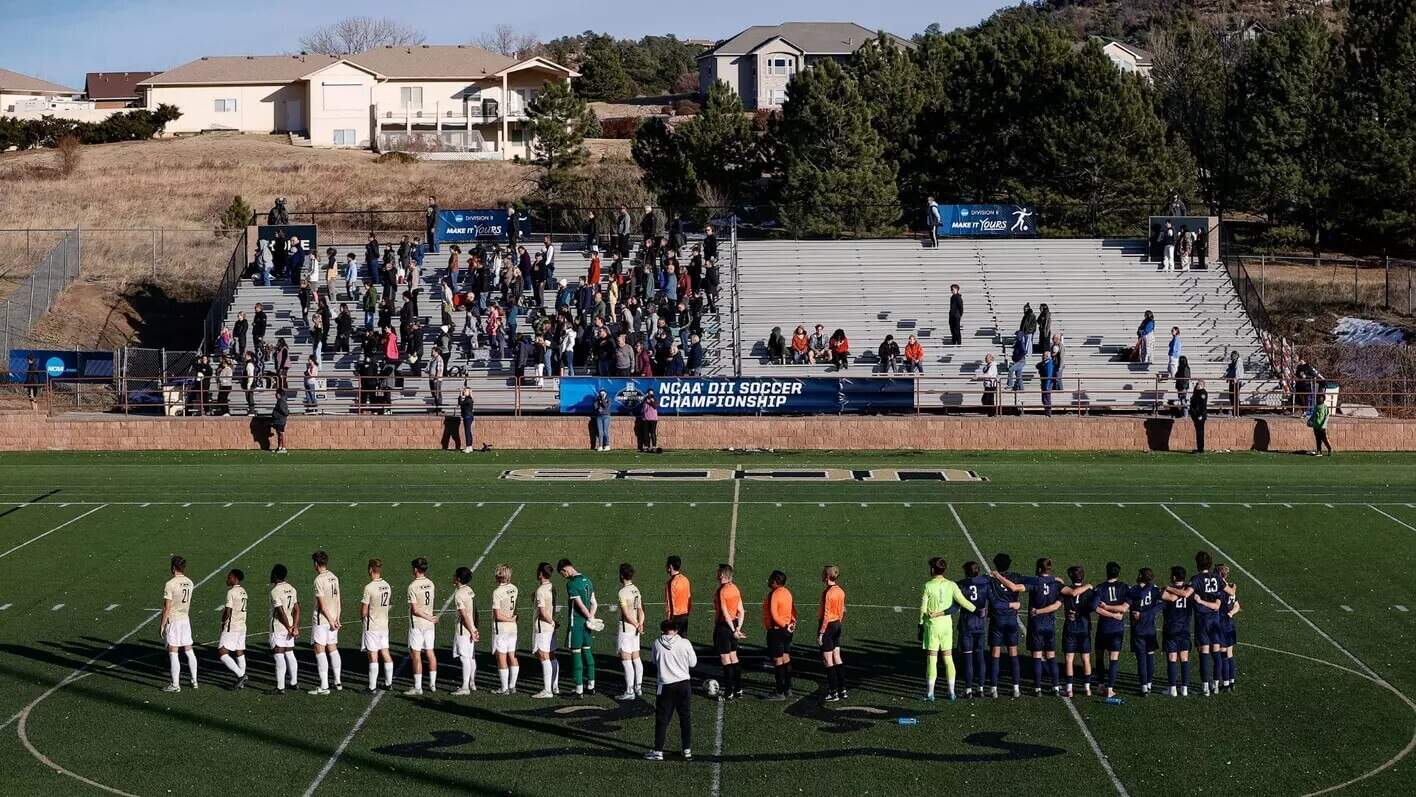
When most players think of college soccer, NCAA Division I usually grabs the spotlight. But for thousands of student-athletes every year, NCAA Division II offers the perfect balance of competitive soccer, academic flexibility, and scholarship support. With over 200 men’s programs and a similar number on the women’s side, D2 is far more than a backup option, it’s a legitimate pathway to playing at a high level while earning a degree.
I know this first-hand. Before transferring to the NAIA, I spent a season competing in NCAA Division II — scoring 10 goals, earning Second Team All-Conference and All-Tournament Team honors. That year gave me insight into what makes D2 soccer special: strong competition, smaller campus communities, and opportunities for late bloomers to shine.
In this guide, I’ll break down everything you need to know about NCAA Division II soccer: from scholarships and recruiting to what life is really like as a D2 athlete. Whether you’re weighing your options or just learning about the levels, this blog will help you figure out if D2 is the right fit.
What Is NCAA Division II Soccer?
Number of Programs
NCAA Division II includes over 200 men’s teams and 260+ women’s teams across the United States. Programs range from small private colleges to large public universities, with a strong presence in the South, Midwest, and East Coast.
Level of Play

Despite the “D2” label, the standard of play is high. Many athletes were standout high school or academy players who didn’t go D1 due to injury, late development, or academic preference.
Some D2 teams regularly beat lower-tier D1 programs in preseason matchups.
Athletic–Academic Balance
Unlike Division I, which can resemble a full-time job, D2 programs offer a more manageable schedule. Athletes typically train four to five days a week, with less travel and media pressure, giving them more time to focus on academics or part-time work.
Program Variety
D2 is not a one-size-fits-all level. Some schools have top-class facilities, experienced coaching staff, and year-round competitiveness. Others operate closer to D3 or NAIA standards. Researching individual programs is essential to finding the right fit.
Who Is NCAA Division II Soccer Right For?
- Players who developed later or missed early recruiting cycles
- Athletes looking for more consistent playing time
- Students who want strong academics and college soccer
- Players who want a college experience beyond just sport
Want a full breakdown of how D1, D2, and D3 compare? Check out our Complete Guide to NCAA College Soccer.
NCAA D2 vs D1 vs D3: Key Differences
When choosing a college soccer path, it’s important to understand how each NCAA division differs. While Division I often gets the most attention, Division II offers a more balanced experience for many players, and Division III puts academics at the forefront.
Scholarships
- D1: Offers full and partial athletic scholarships. Highly competitive.
- D2: Offers partial athletic scholarships, often combined with academic or need-based aid.
- D3: No athletic scholarships. All aid is academic or financial need-based.
Level of Play
- D1: Generally the highest level in college soccer.
- D2: Very competitive, with many teams capable of beating D1 programs.
- D3: Varies. Top teams are strong, but overall level is lower than D1 and D2.
Time Commitment
- D1: Feels like a full-time job with year-round obligations.
- D2: High-level training and travel, but more flexible overall.
- D3: Soccer is secondary to academics; shorter seasons and reduced time demands.
Exposure & Resources
- D1: Larger crowds, better facilities, more media coverage.
- D2: Mixed resources; moderate exposure, mostly regional.
- D3: Less funding and exposure; focus is on the campus experience.
Ideal Fit
- D1: For elite players prioritizing top competition and exposure.
- D2: For athletes who want to compete seriously while maintaining balance.
- D3: For students who prioritize academics and want a lighter soccer schedule.
NCAA Soccer Division Comparison Table
Here’s a simplified breakdown:
| Category | NCAA D1 | NCAA D2 | NCAA D3 |
|---|---|---|---|
| Scholarships | Full & partial (most competitive) | Full & Partial (often combined with academic aid) | No athletic scholarships |
| Level of Competition | Highest level | Strong (many D1-level players) | Varies, generally lower |
| Time Commitment | Very high (full-time athlete) | High but more balanced | Lower time demand |
| Exposure & Resources | High visibility & large budgets | Moderate exposure and resources | Minimal exposure |
| Ideal Fit | Elite players seeking max exposure | Balanced athletes & students | Students prioritizing academics |
Curious about non-NCAA options? Read our guides on JUCO soccer and NAIA soccer to compare every pathway.
NCAA Division II Soccer Scholarships Explained
One of the biggest advantages of playing NCAA Division II soccer is the availability of athletic scholarships, but understanding how they work is crucial.
Scholarship Limits
The NCAA allows each D2 program to offer a maximum of:
- 9.0 scholarships for men’s soccer
- 9.9 scholarships for women’s soccer
Unlike D1, where more full rides are offered, D2 coaches typically divide these scholarships across the roster, meaning most players receive partial scholarships. For example, a coach might split 9 scholarships among 22 players depending on team needs, talent level, and academic performance.
Combining Aid
What makes D2 attractive is the ability to combine different types of financial support:
- Athletic scholarships
- Academic scholarships
- Need-based aid
- Other school-specific grants
This “stacking” approach often makes D2 soccer more affordable than it first appears, especially for students with strong academics or demonstrated financial need.
Earning a Better Package
Scholarship amounts can increase year to year based on:
- On-field performance
- Academic standing
- Leadership and coach evaluations
Some players walk on as freshmen and earn significant athletic aid by their second year.
In my case, I arrived at my NCAA Division II program on a strong scholarship. After leading the team in goals and earning All-Conference honors, I was offered a full ride to return for a second season (I turned it down). It’s a reminder that in D2, performance directly impacts your financial package.

A Few Important Notes
- Not all D2 programs are fully funded. Some may only offer 3–6 scholarships, depending on athletic department budgets.
- Academic aid can sometimes be more valuable than athletic money, especially at schools that reward high GPAs or test scores.
- Coaches often target high-GPA athletes because they can stretch scholarship dollars further.
How to Get Recruited to NCAA Division II Soccer
The recruiting process for NCAA Division II soccer is competitive — but also flexible. Coaches often recruit players later than D1 programs do, and they tend to value well-rounded student-athletes who show initiative, consistency, and strong academics.
Recruiting Timeline
D2 coaches may start identifying prospects as early as sophomore year, but most offers go out between junior and senior year. Many D2 schools continue recruiting into senior spring or even after graduation, especially if roster spots open unexpectedly.
Coach Contact Rules
- D2 coaches can initiate contact starting June 15 after sophomore year
- Before that, players can reach out — but coaches can’t reply directly
- Always start with a personalized email and highlight video
- Follow up with transcripts and a short player CV if there’s interest
Highlight Video Tips
- Keep it to 3–5 minutes
- Show your best clips early, as coaches rarely watch the full video
- Include an intro slide with key info: name, grad year, position, GPA, contact details
- Bonus: mention if you’re open to partial scholarships or academic aid
Academic Eligibility
To play NCAA D2, you must:
- Register with the NCAA Eligibility Center
- Meet minimum core course GPA and standardized test scores (if required)
- Stay on top of your school’s course requirements, as even late academic issues can block you from enrolling
ID Camps & Unofficial Visits
- Many D2 coaches recruit through ID camps, especially those held on campus
- Unofficial visits are a great way to meet the coach, tour the facilities, and show interest
- If you can’t attend in person, ask to set up a Zoom call or send a personalized video message
What It’s Like to Be an NCAA Div Soccer Player

Playing NCAA Division II soccer is a serious commitment, but compared to Division I, there’s typically more room for balance and personal growth.
Training and Travel in NCAA Division II Soccer
Most D2 teams train 4–5 days a week in season, with additional sessions in the spring. You’ll lift, do video sessions, and travel for matches, but the travel tends to be regional, limiting missed class time. Off-season workloads vary by program, but are usually more flexible than D1.
Academic Life
One of the biggest benefits of D2 is the ability to pursue your major without having to sacrifice playing time or schedule flexibility. Many D2 players take on challenging degrees, part-time work, or internships during the year.
Team Environment
D2 programs often foster tight-knit, supportive environments. With smaller rosters and less pressure from outside media, the team culture tends to be inclusive and developmental. You’ll still compete hard for your spot, but you’re more than just a number.
Coach Expectations
Don’t mistake flexibility for low standards, as D2 coaches expect a lot. Punctuality, commitment, and consistency are non-negotiable. Some programs are nearly indistinguishable from lower D1s in terms of intensity.
My Experience playing NCAA Division II Soccer
At my D2 school, we trained hard, travelled regularly, and competed against strong opponents, but I also had time to stay on top of academics and enjoy the college experience. That balance was a big part of why I was able to perform on the field and settle in off it.
Top NCAA Division II Soccer Programs
While the quality of D2 soccer varies, several programs consistently rank among the best in the country. Teams like Cal State LA, University of Charleston, Franklin Pierce, and Palm Beach Atlantic have built strong reputations through national tournament runs and professional alumni.
Want a deeper dive? I’ve broken down some of the most competitive and well-supported non-D1 programs here:
Best Non-Division I College Soccer Programs
Should You Choose NCAA Division II Soccer?
NCAA Division II isn’t the flashiest option in college soccer, but for the right type of player, it can be the best fit. both on and off the field.
Who D2 Is Great For
- Late bloomers who missed early D1 recruiting windows
- Players who want meaningful playing time, not just a roster spot
- Students looking for a balanced college experience
- Recruits with strong academics who can stack academic and athletic aid
- International players who need flexibility with scholarships and eligibility

What to Consider
- Level of play: Still very competitive, but varies more than D1
- Scholarship availability: Full rides exist, but most offers are partial
- Program variety: Research is essential — some D2 schools feel like small D1s, others closer to NAIA or D3
- Lifestyle: More balance, but expectations are still high
If you’re serious about soccer but don’t want to sacrifice academics, travel, or personal development, D2 can offer a more sustainable, well-rounded college experience.
Still unsure which college level is right for you? Compare NCAA vs NAIA vs JUCO in our head-to-head breakdown.
Frequently Asked Questions About NCAA Division II Soccer
Yes, but it’s uncommon. Most D2 programs offer partial scholarships, which are often combined with academic or need-based aid. However, standout players can earn full rides, either immediately or after proving themselves, as I experienced personally.
Absolutely. Many D2 teams are capable of beating lower-tier D1 programs. The level of play is strong, especially at nationally ranked programs, and many players go on to play professionally or semi-professionally after college.
Coaches can begin official contact June 15 after your sophomore year, but many players are recruited later than in D1. It’s not uncommon for D2 coaches to offer spots well into senior year or even post-graduation if a roster spot opens up.
To be eligible for NCAA D2, you generally need a 2.2–2.3 GPA in your core courses and a qualifying SAT/ACT score. However, stronger academics can unlock better aid packages and make you more appealing to coaches.
The NCAA allows up to 9.0 scholarships for men and 9.9 for women per program. These are usually split across the team, so most players receive partial offers.
🎓 Final Thoughts on NCAA Division II Soccer
NCAA Division II soccer offers a unique balance of high-level competition, academic flexibility, and real scholarship opportunities. For players who value both their development on the field and their growth off it, D2 can be the perfect fit. Whether you’re a late bloomer, an international student, or simply want more than just a roster spot, NCAA Division II soccer deserves serious consideration in your college search.
⚽ Ready to start your D2 journey?
Whether you’re a player, parent, or coach, I’m always open to talking about the college soccer pathway. You can reach me directly at joseph@collegesoccerinsight.com.

Leave a Reply